
Photo service
AllChinaBuy Detailed Photos vs Standard Inspection Photos
A source-based guide to the public photo-service descriptions, how to write a useful request and when another image is worth paying for.
Verified on the public interface
Three facts to carry forward
- The public order page distinguishes standard inspection photos from optional detailed-photo requests.
- Its wording refers to three free standard photos and one requirement per detailed photo.
- A photo that misses the stated requirement can be requested again under the displayed service description.
Section 01
Standard and detailed photos have different jobs
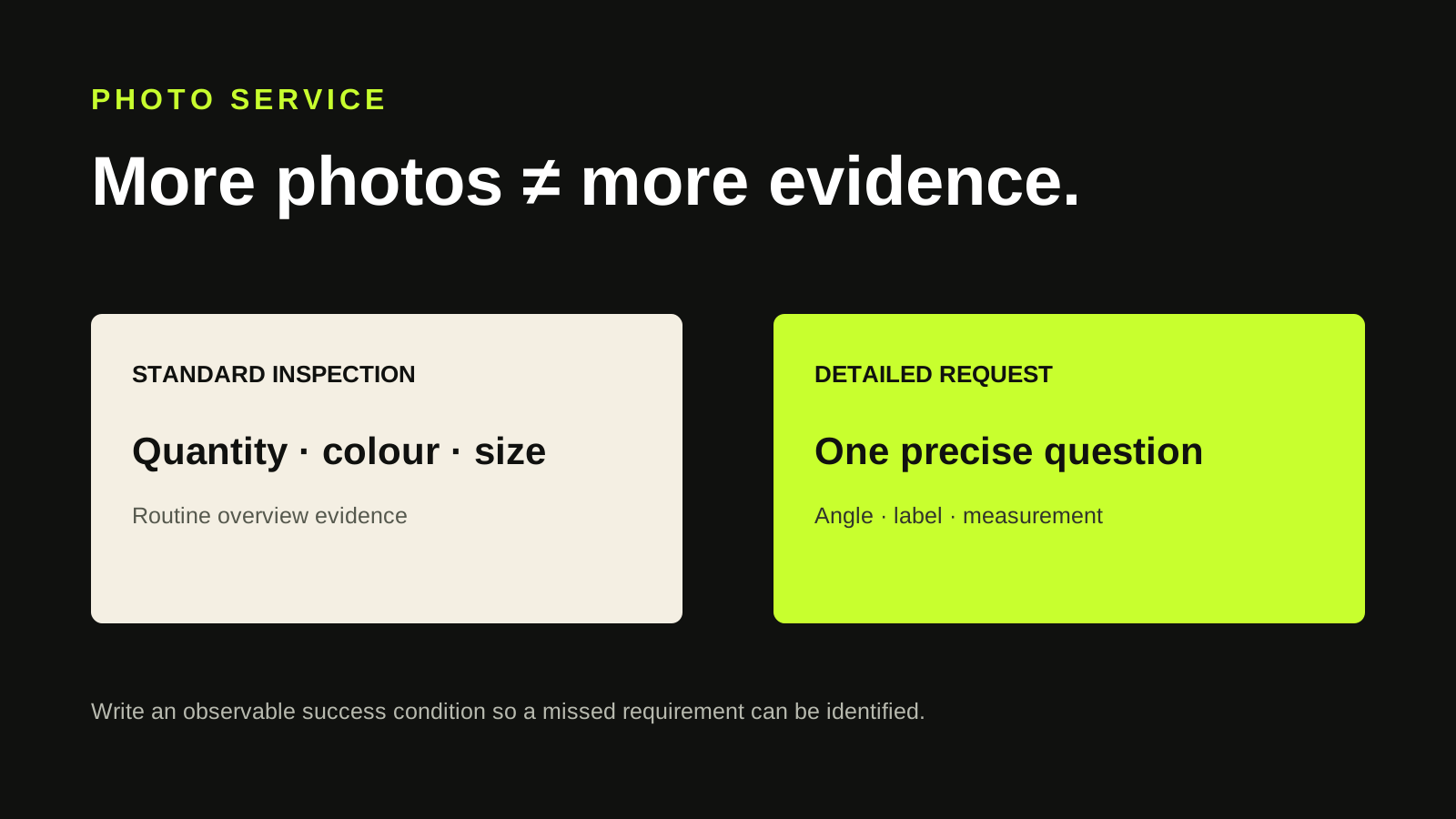
The public order interface describes standard inspection around quantity, colour and size and refers to three free photos in its detailed-photo explanation. Those images are designed to document a routine warehouse check. A detailed photo is a separate, user-directed request for a precise angle, label or measurement that the standard set may not show.
Do not judge value by photo count alone. Three clear overview images may establish the correct option but fail to answer whether a chest width matches your requirement. One targeted measurement image can be more useful than five additional beauty angles. Start by listing the decisions that could lead you to accept, question or return the item, then request only missing evidence tied to those decisions.
Section 02
Write one observable requirement per image
AllChinaBuy’s public wording tells users to put one detailed requirement in each photo request. Follow that literally. “Show the size label and measure the insole and photograph the heel” contains three tasks and makes it unclear whether a partial response is acceptable. Split it into independent requests, ordered by importance.
A good request specifies object, viewpoint and success condition: “Remove the insole if removable, lay it flat beside a centimetre ruler, and show heel-to-toe length with both endpoints visible.” Avoid subjective terms such as “high quality,” “perfect” or “looks authentic.” A warehouse worker can photograph an observable feature; they cannot turn a broad opinion into reliable evidence.
- One object or detail
- One angle or measurement
- Visible scale or label where relevant
- A clear condition for a successful photo
Section 03
Use the retake promise precisely
The public service text says a detailed photo can be retaken free when it does not match the user’s requirement. That is strongest when the original request is objective. If you asked for the full ruler and one endpoint is cropped, explain that exact mismatch. If you merely asked for “a better photo,” there is no measurable standard against which to compare the result.
Save the request and returned image together. Mark the missing element on a copy only if the interface allows a reference, while keeping the original. Do not change the requirement during a retake request; a new angle is a new request. The live account’s current service terms and dispute window govern, so act promptly when an image is unusable.
Section 04
Understand the displayed pricing language without freezing it
The reviewed public order text advertises a discount beginning with the third detailed photo, but this guide does not publish a fixed currency fee. Service pricing, membership benefits and promotions can change. Read the amount displayed on the exact order before adding the service, confirm how many requests the discount covers and save the order-stage total.
Spend on information, not reassurance. A measurement that prevents an unusable size can justify its fee. Another logo close-up usually cannot prove authenticity. For a low-value item, the cost of multiple photos may exceed the risk they reduce. For a high-value or non-returnable item, unresolved uncertainty is more expensive; decide with that asymmetry in mind.
Section 05
Use category-specific request templates
For clothing, ask for flat chest width, body length, shoulder width or a care/material label. For shoes, request removable insole length, size tag, outsole or a suspected defect. For bags, request exterior dimensions, strap range, interior compartments or hardware damage. For electronics, a model label and plug can be photographed, but an image cannot establish battery health or electrical safety.
For a visible defect, describe location and scale: “photograph the left sleeve cuff from 20 cm away with the loose seam centred.” For colour, ask for a neutral-light image beside a plain reference, while recognizing that screens and cameras still shift colour. Prioritize evidence that can change the decision.
Section 06
Keep the public-page evidence in context
Our description is based on the public English AllChinaBuy order page checked July 17, 2026. It does not guarantee that every product, order type or account receives the same number of free images or identical pricing. Used-item flows can show additional photo wording, and sealed packages can limit what a worker may inspect without opening them.
Before paying, compare the service name, count, fee and request box in your current order with this guide. If they differ, the current order screen wins. The durable method is independent of the promotion: define the decision, request one observable fact, verify the returned image against the wording and keep the record.
Primary evidence
Official pages checked
These links go to AllChinaBuy’s public mobile website. Dynamic content, logged-in prices and availability can change after our review date.
- AllChinaBuy Order Confirmation ↗Public order-stage descriptions for inspection, detailed photos, original packing and cost timing.